
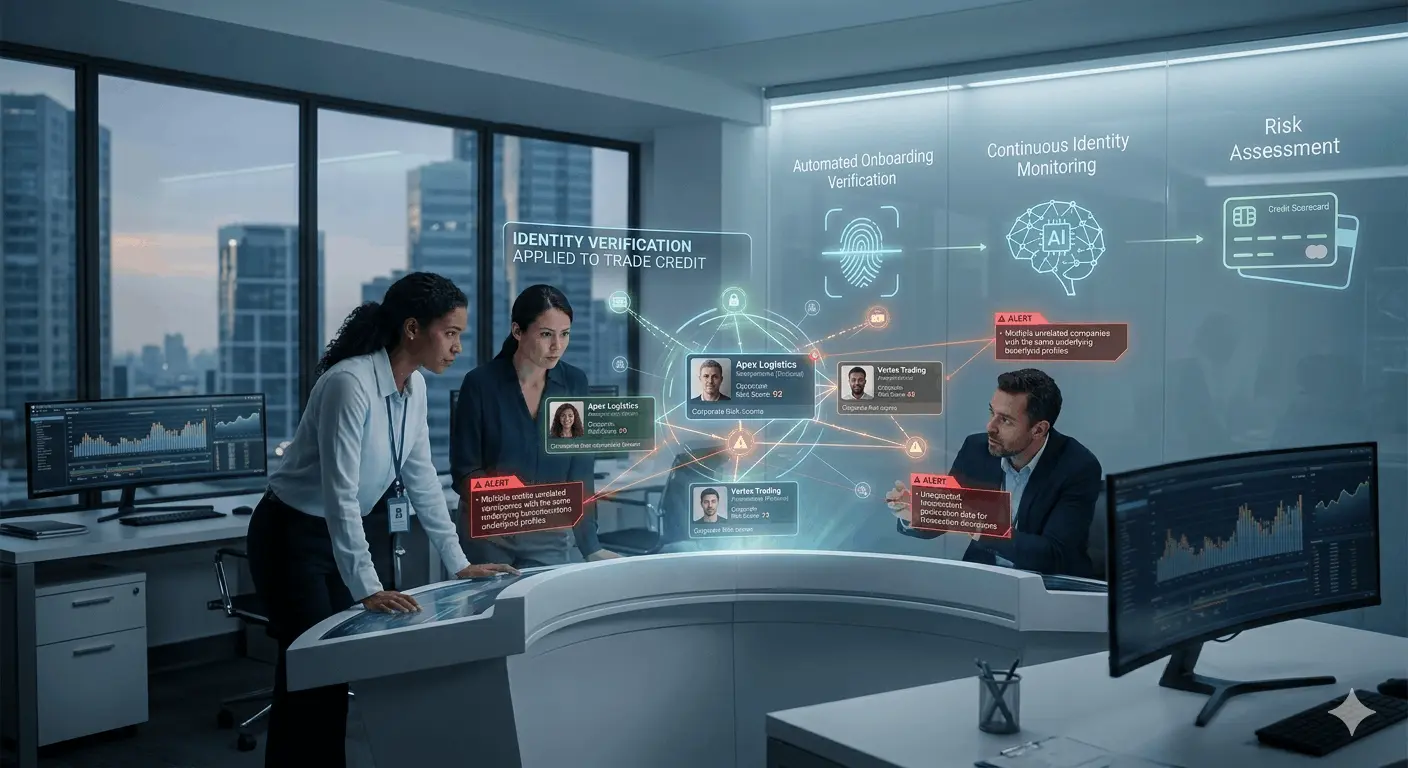
Trade Credit Fraud and SME Identity Verification
The challenge in trade credit management centers on distinguishing legitimate small businesses from fraudsters operating under fake identities. Online credit applications compound this difficulty, as “any person can register with ASIC, get an ABN and buy a legitimate looking website” with minimal investment.
According to the Australian Institute of Criminology’s 2020 report, identity theft reports increased 33% in a single year. Complete identity packages sell on darknet markets for as little as a few hundred dollars, with identity theft’s annual financial impact in Australia estimated between $1.4 billion and $2 billion.
AI and Machine Learning as Fraud Prevention Tools
AI-powered SaaS platforms offer scalable fraud detection that improves through machine learning. AI simulates human decision-making for repetitive tasks, while machine learning allows systems to learn from data without explicit programming.
The Mark Scenario
A credit manager reviewing Mark’s trade credit application may perform standard 100-point identity checks and ASIC verification, but lack comprehensive data. Conversely, robotic process automation can:
- Ingest applications from multiple channels (online, QR codes)
- Use optical character recognition to extract and complete datasets
- Run machine learning checks across extensive databases including ASIC, bank transactions, and government licensing
- Execute facial recognition via biometrics
- Deliver fraud risk predictions within 10 minutes
Machine Learning Functions
Rather than auto-declining high-risk applications, algorithms flag suspicious cases for credit manager review. For smaller credit amounts below set thresholds, auto-decisioning can approve low-risk applications independently.
AI assists credit managers through:
- Predictive Analytics: Detecting suspicious behavioral patterns correlating with historical fraud
- Anomaly Detection: Identifying deviations from normal activity
- Recommendations: Suggesting immediate next actions following detection
Data Quality and Identity Tokenization
Poor-quality identity data increases fraud risk. Data fragmentation across sales channels creates standardization challenges. Technologies like OCR, facial recognition, and digital identity solutions reduce these risks cost-effectively.
Balancing Security with Customer Experience
Stringent fraud prevention often burdens both credit teams and customers, potentially reducing approval rates and revenue. Automation transfers verification burden from humans to machines, maintaining security while improving efficiency.
Businesses adopting automation typically see “a 30% rise in safe revenue within the first month,” demonstrating clear financial justification for implementation.
Our Corporate Sponsors